
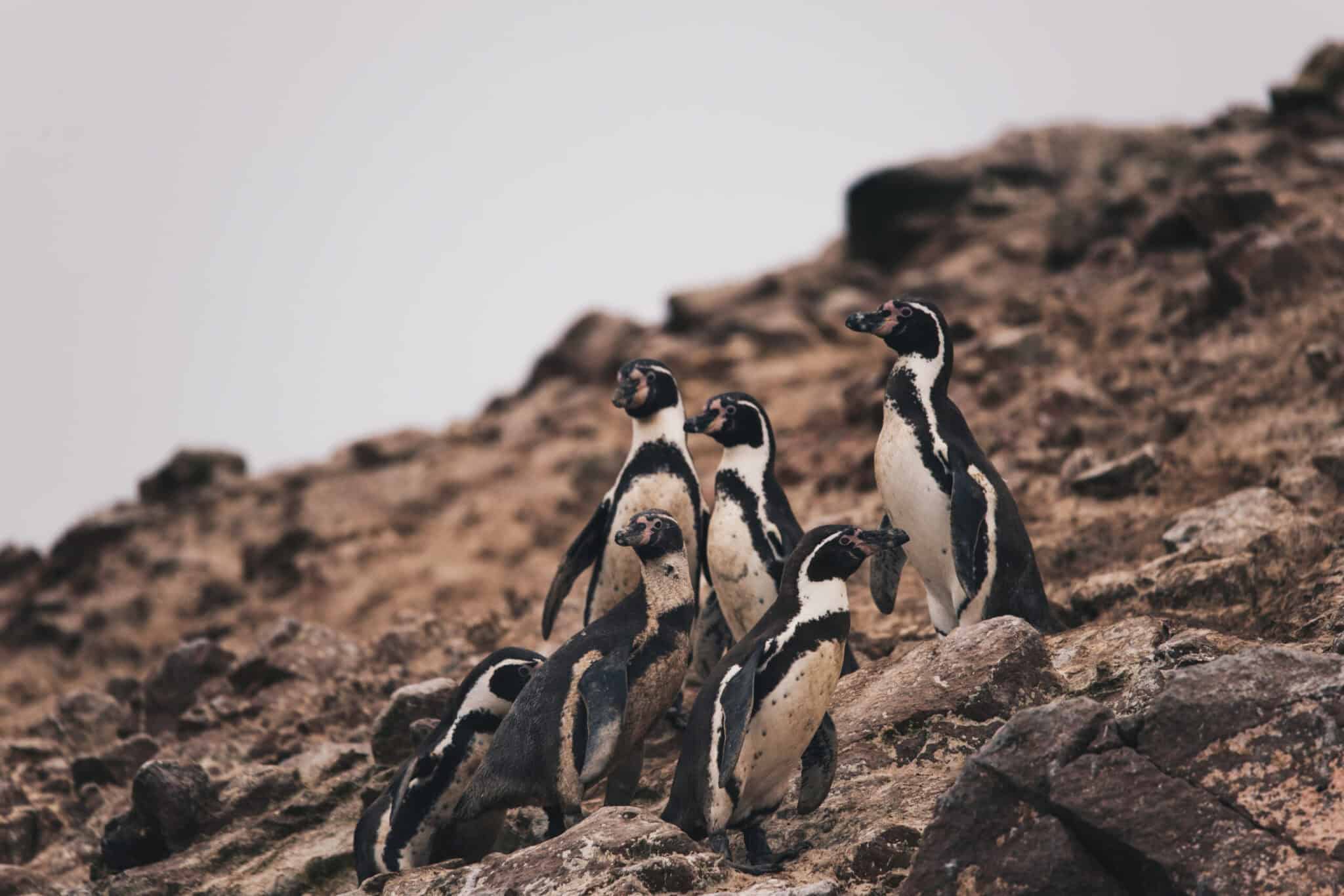
Humboldt penguins, also called Peruvian penguins, inhabit the cool waters of the west coast of South America. One of the best places to observe them are the islands of Islas Ballestas in Peru. In this article, you will learn where they appear, what they are characterized and why their population is threatened.
Where there are Humboldt penguins
The west coast of Peru and Chile is the site of Humboldt penguins, also called Peruvian penguins. One of the places where they can be seen are the Peruvian islands of Islas Ballestas, which is the habitat of many species of birds and aquatic animals.
These islands can only be seen from boats – there is no public access to them. Only occasional researchers and people who occasionally come and clean the island have access to Islas Balletas. This place is a paradise on earth for animals who do not need human interference for happiness.
How to get to Islas Ballestas and when it is worth it you will read in the entry: How to get to Islas Ballestas and when you can observe the most animals?
Why Peruvian penguins are at risk of extinction
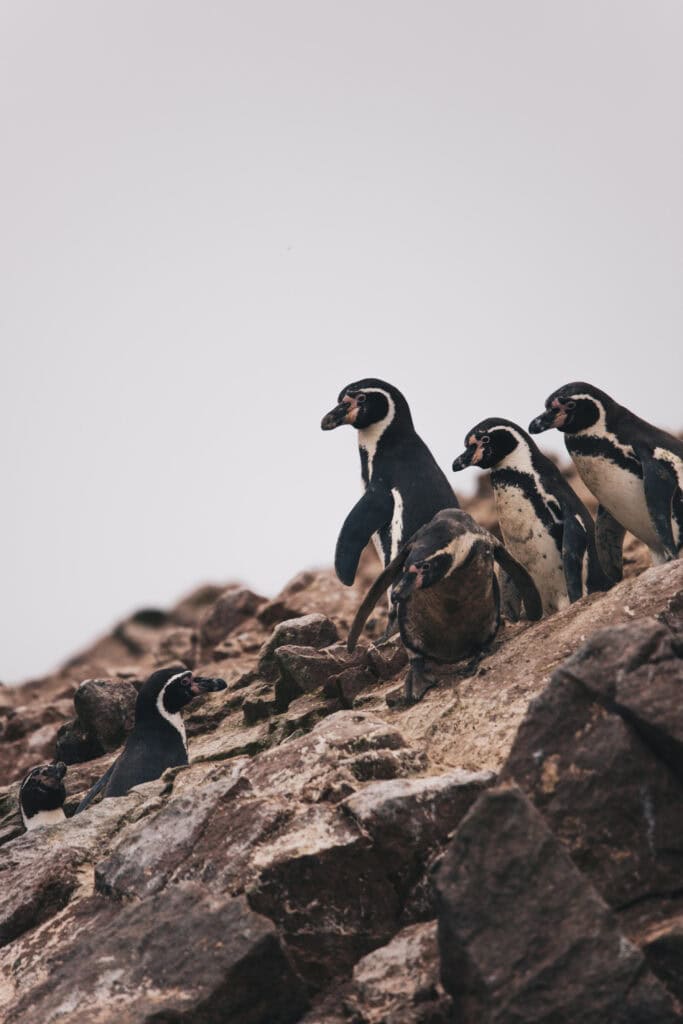
Fortunately, not everyone can walk on these islands, because Humboldt penguins are according to the International Union for the Conservation of Nature that has been exposed to extinction continuously since 2000. Their population in 2017 was estimated to be no more than 23,800 adults. In Chile, where about 80% of the population lives, this species was officially declared endangered in late 2025.
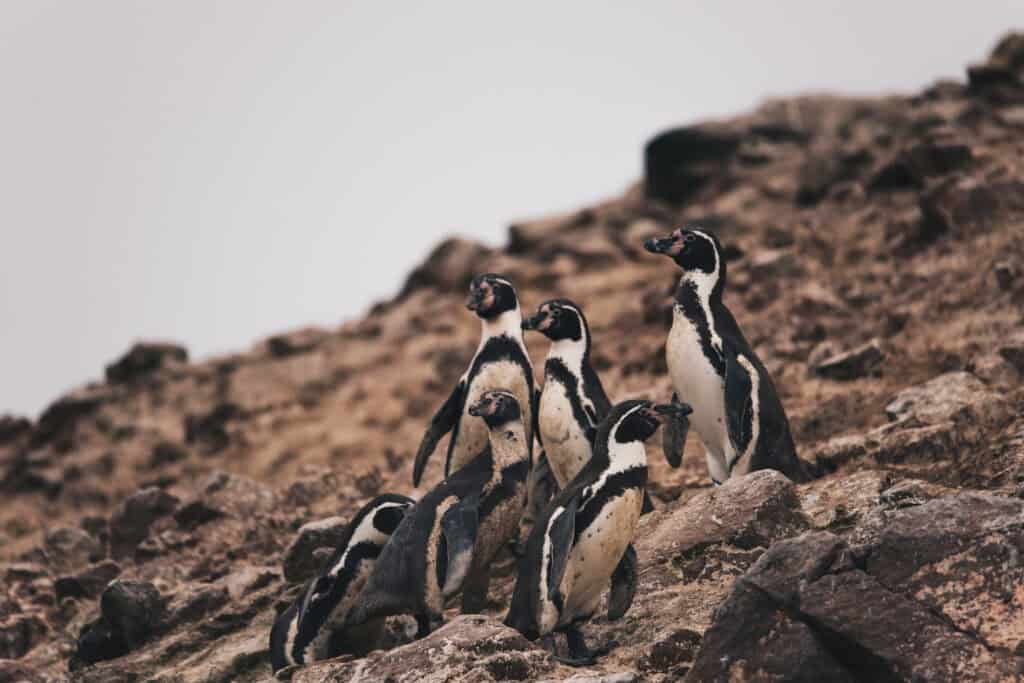
As the researchers describe, the reasons for the constant confusion of the numbers of Humboldt penguins on the coasts of South America are several and these are mainly:
- Fishing with gill nets, which are currently one of the main causes of death of these individuals, as penguins become entangled in these fishing nets.
- Overfishing sardines and anchovies, which are the main food of Peruvian penguins.
- A serious outbreak of avian influenza in 2023 probably caused the death of many penguins.
- In 2024, the climate phenomenon of El Niño also drastically reduced food availability. This prevented penguins from reproducing throughout the year.
- The impact of climate change on ocean currents has also contributed to reducing the number of these birds on the Chile coast.
What Peruvian Penguins Do
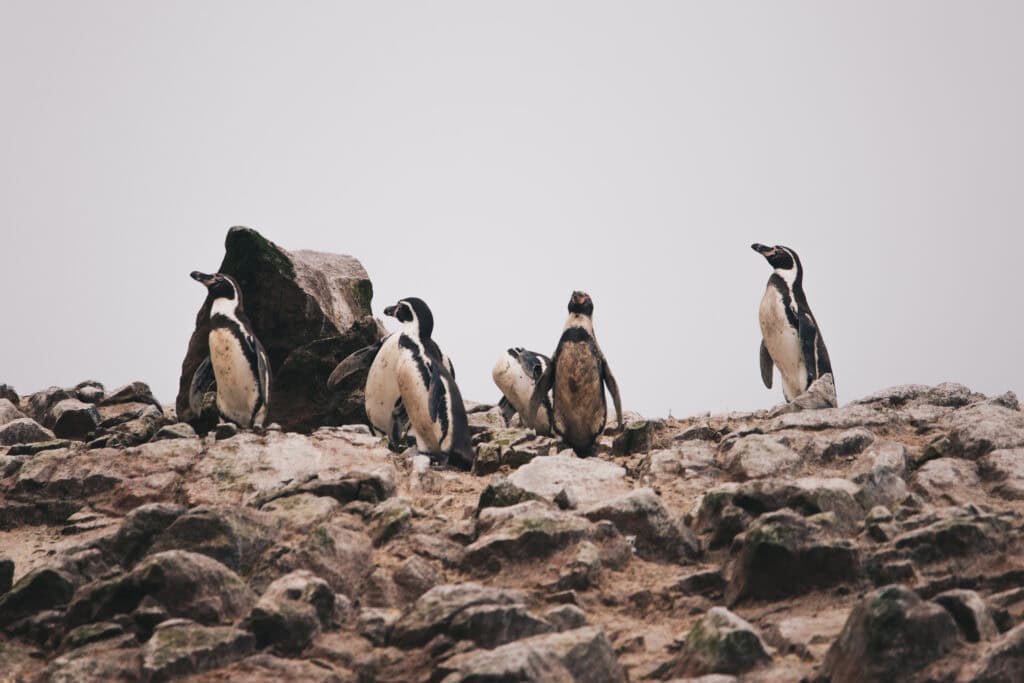
Like most penguins, Peruvian penguins also mate for life, feed and raise offspring together.
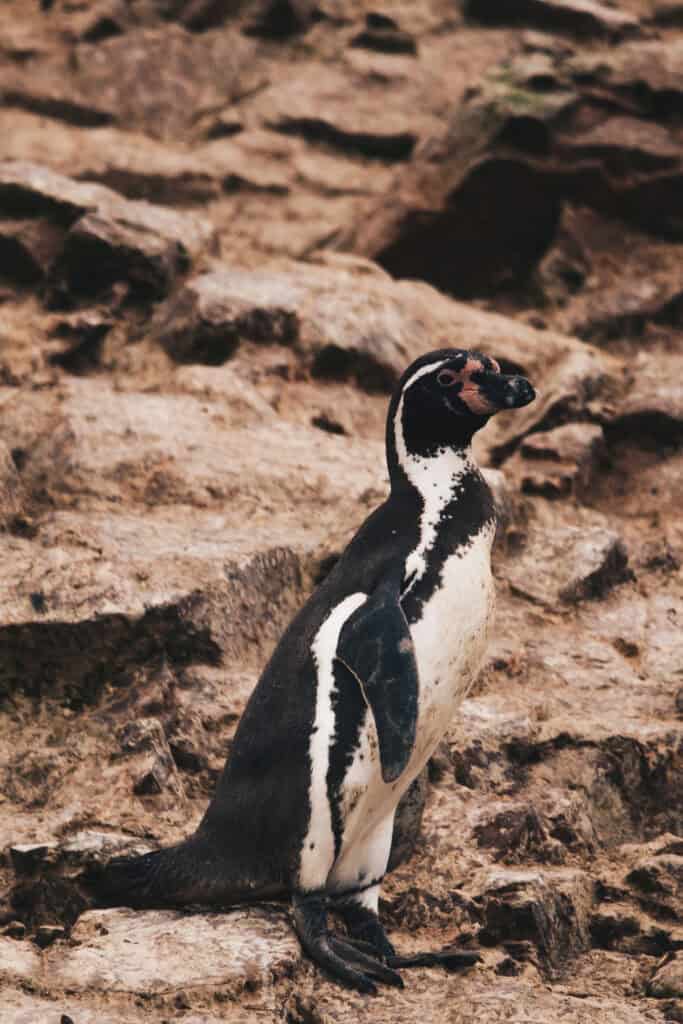
Humboldt's penguins are medium sized – they reach a length of 66 to 70 cm and weigh between 4 and 5 kg. They have black grey feathers on their backs and white feathers on their chests, black heads with white stripes over their eyes, which surround the sides of their heads and join on their chins, forming a horseshoe shape and a black, powerful beak with a pink cap. This pink part is an uncovered skin that helps them cool down as the temperature rises rapidly.
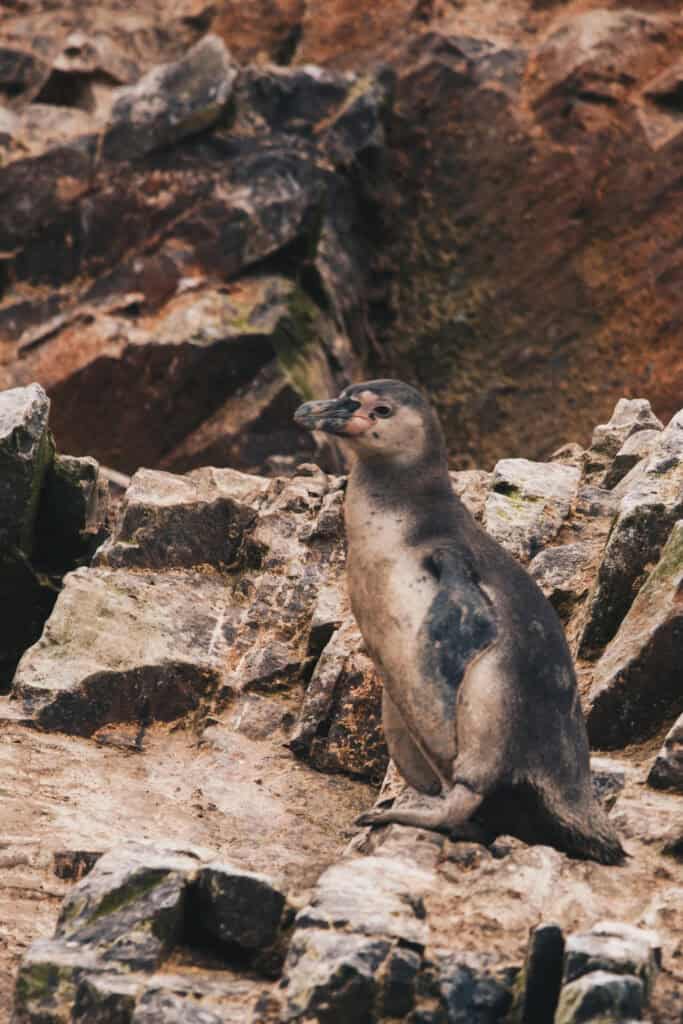
The characteristic feature of this species is a uniform black wristband on the breast, which helps distinguish them from the Magellanic penguins. A uniform wristband also helps distinguish between adults and young people who have a darker head.
This is well seen comparing the two pictures below. The first looks like an adult, while the second looks like a young individual.
You want to meet other animals in Islas Ballestas, Peru?
We invite you to our other articles on this subject:
And this is where Islas Ballestas are:




Add comment